Features · Productions

The job is the thing. Everything hangs off it.

A production is not a folder — it is the record the gear list, the call sheet, the quote, the invoice and the releases all read from. Enter the dates once and every document knows them. The board opens with what is blocked, not with a list you have to read.
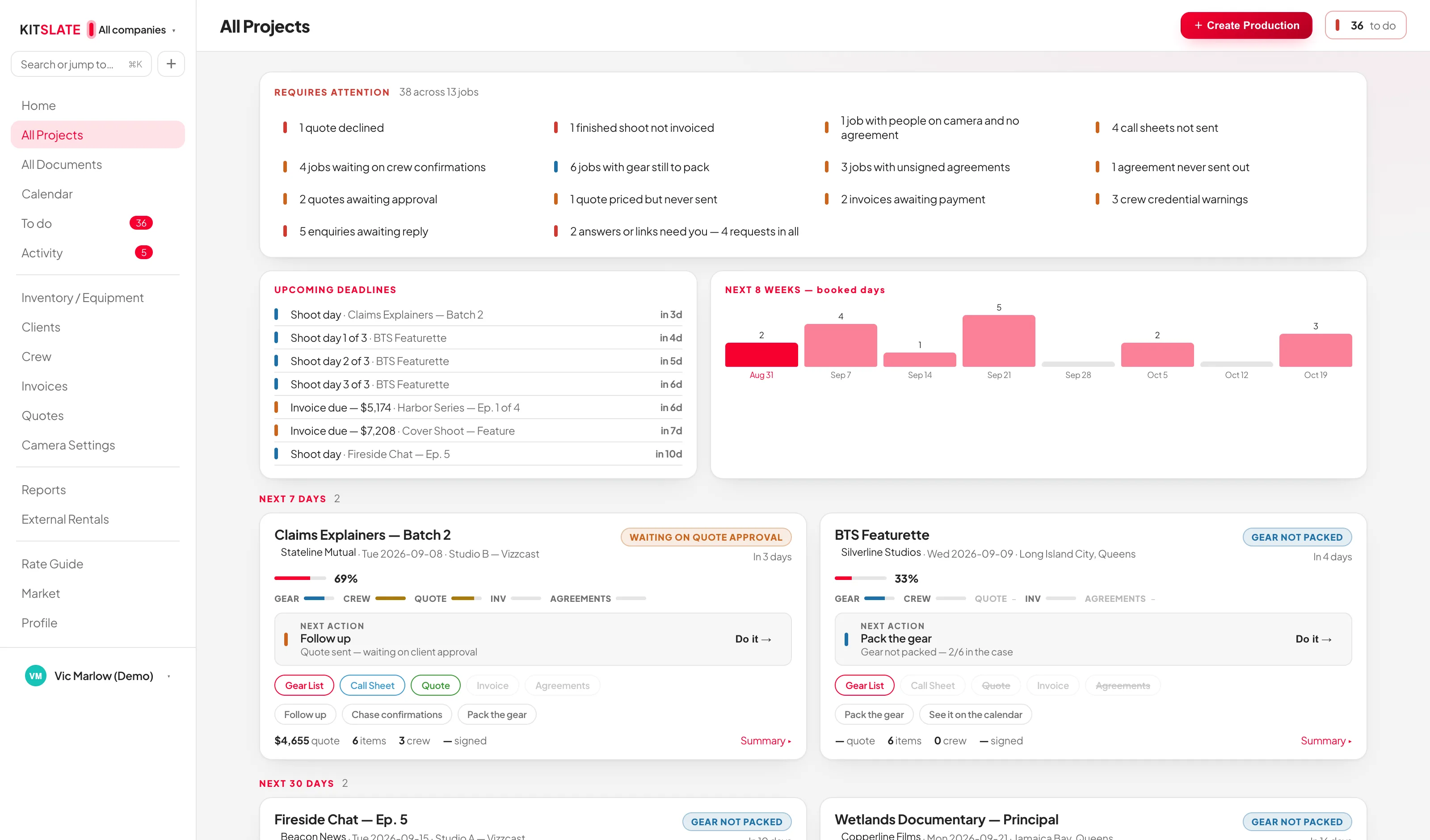
app.kitslate.app · projects
The All Projects board — the attention panel across the top, then job cards in date buckets, each with a completion bar and five document tracks
Attention first, then everything else in the order it lands.
01 · ATTENTION — what is blocked, first

A dashboard, not a list.

The panel across the top pools every blocker on every job into one line each — 2 invoices overdue, 1 quote declined, 3 call sheets not sent, 4 jobs with gear still to pack — with the total and how many jobs it spans.

Each row is a filterClick 2 invoices overdue and the board narrows to those two jobs. Click again, or Clear filter, to go back.
Ordered by how much it should worry youOverdue invoices and declined quotes first; credential warnings last.
It does not vanish when things are fineWith nothing blocked the panel reads Nothing is blocked — every job is on track and stays where it is. A permanent fixture, not a crisis alert.
Deadlines and workloadUnder it: real dated commitments in order, and booked days as a bar per week for the next eight — so a quiet month or a collision is visible before you have read a single card.
02 · READ — one card, five tracks

What state is this job actually in?

Jobs sit in date buckets rather than one long list — shooting today, tomorrow, next 7 days, next 30, later, no date yet, wrapping up, completed, archived. Empty buckets are not drawn.
Five document tracksGEAR, CREW, QUOTE, INV, REL — each a bar in that document’s own status colour. Hover one and it names the state: Quote — Awaiting approval · $4,200. A track marked not required draws a dash, not an empty bar.
Next action, done from the cardThe single most useful next move, with a Do it → button that performs it without opening the job.
Document chipsThe five documents, coloured when started, faded when not, struck through when not required. Clicking Invoice before one exists raises it from the quote.
The numbersQuote total, item count, crew count, agreements signed — on the card, before you open anything.
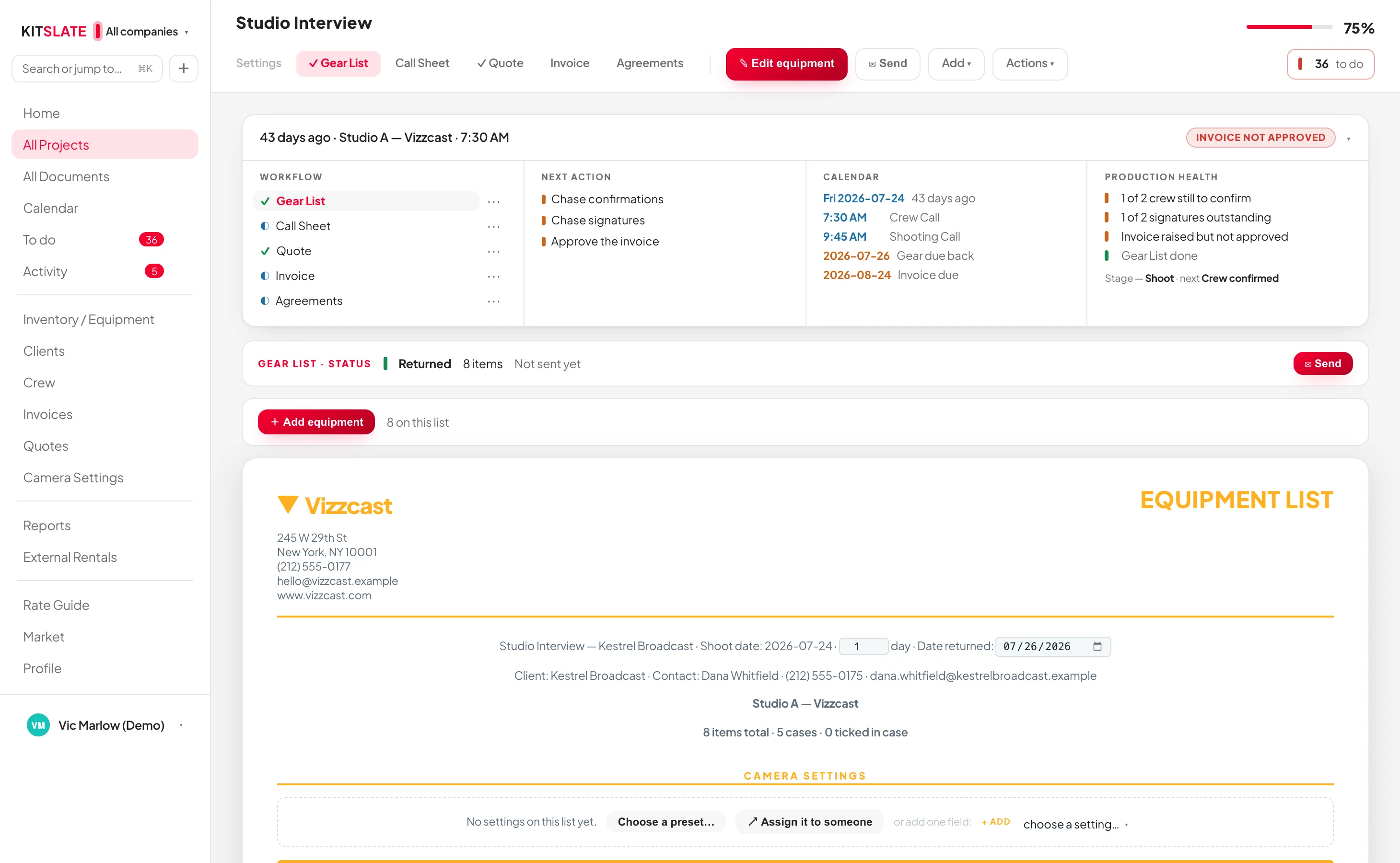
app.kitslate.app · production
A single production open, showing its tabs and the documents raised against it
One job, with every document it has raised.
03 · CARRY — entered once

Nothing is typed twice.

The dates you set on the job are the dates the call sheet prints, the days the gear is booked out for, and the days the quote prices. Change them in one place.

The quote knows the gearItems come off the gear list at your own day rates, and the invoice is raised from the quote rather than retyped.
The call sheet knows the crewEveryone on the quote crosses to the call sheet in one click, with role, phone and email already on the row.
The releases know the talentThe talent block on the call sheet is what feeds the agreement, so nobody is entered twice.
Gear cannot be in two placesEquipment booked on one job is out. Conflict detection covers equipment and studio rooms across every booking on the calendar.
QUESTIONS — the ones people ask first

Before you try it.

Where does a job start?

Anywhere: an enquiry, a quote, a calendar hold, or an invoice you raised somewhere else. Create Production can build the job from any of them rather than making you start with an empty form.

Do I have to use all five documents?

No. Mark one not required and its track draws a dash and its chip is struck through — the completion bar stops counting it.

What happens to a job when it is finished?

It moves to wrapping up while anything is outstanding, then completed, then archived. Archived jobs stay searchable and keep their documents.

Can I run more than one company?

Yes. The company switcher is a filter that applies to the board, the calendar, documents and most reports, and each company carries its own branding, numbering and billing currency.

Open a job that already exists.

The sandbox has productions at every stage — one blocked, one shooting, one waiting on payment. Nothing to install.